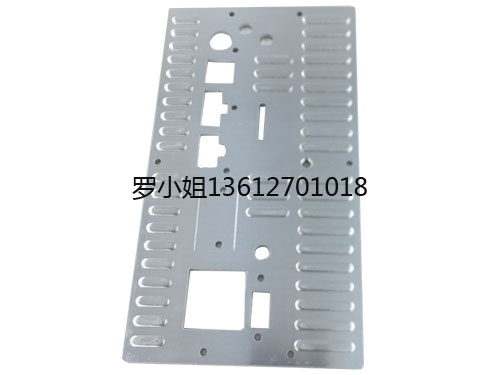
The die used in stamping is called a stamping die, or simply a die. A die is a specialized tool for batch processing materials (metal or non-metal) into the required stamped parts. Die is of vital importance in stamping. Without a die that meets the requirements, batch stamping production is difficult to carry out. Without advanced dies, advanced stamping processes cannot be achieved. Stamping process, dies, stamping equipment and stamping materials constitute the three elements of stamping processing. Only when they are combined with each other can stamping parts be obtained.
Compared with other methods of mechanical processing and plastic processing, metal stamping processing has many unique advantages both in technical and economic aspects. The main manifestations are as follows.
The production efficiency of stamping parts processing is high, and the operation is convenient, making it easy to achieve mechanization and automation. This is because stamping is accomplished through dies and stamping equipment. The stroke frequency of a common press can reach dozens of times per minute, while that of a high-speed press can reach hundreds or even thousands of times per minute. Moreover, a stamped part may be obtained in each stamping stroke.
During stamping, since the die ensures the dimensional and shape accuracy of the stamped part and generally does not damage the surface quality of the stamped part, and the die has a relatively long service life, the quality of stamping is stable, the interchangeability is good, and it has the feature of being "identical".
Stamping parts can be processed into components with a wide range of sizes and complex shapes, such as small parts like the second hand of a watch and large parts like the longitudinal beams and body panels of a car. Moreover, due to the cold deformation hardening effect of the material during stamping, the strength and rigidity of the stamped parts are relatively high.
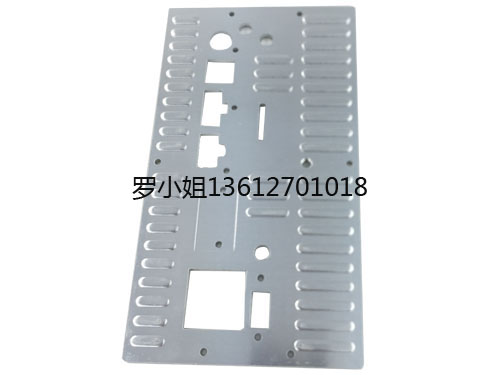
Stamping generally does not produce chips or scraps, consumes less material, and does not require other heating equipment. Therefore, it is a material-saving and energy-efficient processing method, and the cost of stamped parts is relatively low. Metal stamping parts can be processed into components with a wide range of sizes and complex shapes, such as small parts like the second hand and cover of a watch. Moreover, due to the cold deformation hardening effect of the material during stamping, the strength and rigidity of the stamped parts are relatively high.
Metal stamping parts processing is a production technology that uses the power of conventional or dedicated stamping equipment to directly subject sheet metal to deformation force in the die and deform it, thereby obtaining product parts of certain shapes, sizes and properties. Sheet metal, dies and equipment are the three essential elements of stamping processing. Stamping processing is a cold deformation processing method for metals. Therefore, it is called cold stamping or sheet metal stamping, abbreviated as stamping. It is one of the main methods of metal plastic processing (or pressure processing) and also belongs to material forming engineering technology.
Due to the superiority of stamping, stamping processing is widely applied in various fields of the national economy. For instance, stamping processing is carried out in various sectors such as aerospace, aviation, military industry, machinery, agricultural machinery, electronics, information, railways, post and telecommunications, transportation, chemical engineering, medical equipment, household appliances and light industry. Not only is it used throughout the entire industry, but everyone is also directly related to stamping products. There are many large, medium and small stamping parts on planes, trains, cars and tractors. The body of a car, a vehicle
The frame, rims and other components are all processed from metal stamping parts. According to relevant survey statistics, 80% of bicycles, sewing machines and watches are stamped parts. Ninety percent of the components in televisions, tape recorders and video cameras are stamped parts. There are also food metal can shells, steel boilers, enamel basins and bowls, and stainless steel tableware, all of which are products processed by stamping with molds. Even in the hardware of computers, stamping parts are indispensable. However, the dies used in stamping processing are generally specialized. Sometimes, a complex part requires several sets of dies to be processed and formed. Moreover, the manufacturing precision of dies is high and the technical requirements are high, making them technology-intensive products. Therefore, only when the production batch of stamping parts is large can the advantages of stamping processing be fully demonstrated, thereby achieving better economic benefits.
Of course, stamping processing also has some problems and disadvantages. The main manifestations are two public nuisances, namely noise and vibration, generated during stamping processing, and safety accidents of operators occur from time to time. However, these problems are not entirely caused by the stamping processing technology and the molds themselves, but mainly by traditional stamping equipment and backward manual operations.
Dongguan Jingzhuan Electronic Technology Co., Ltd. © Copyright 2025
【Backend】本站相关网页素材及相关资源均来源互联网,如有侵权请速告知,我们将会在24小时内删除