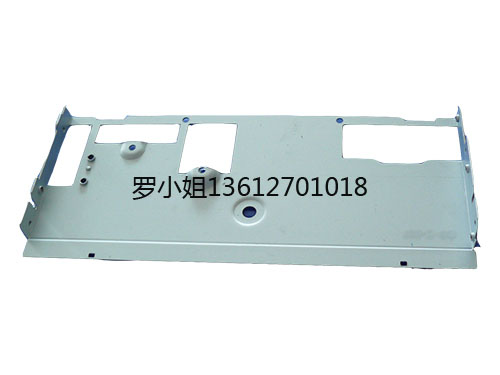
The maintenance of continuous dies must be carried out with care, patience and in a step-by-step manner. It is strictly forbidden to engage in it blindly. When repairing the mold due to a malfunction, a material tape should be attached for the convenience of problem inquiry. Open the mold, check the care belt, inspect the mold condition, confirm the cause of the fault, identify the problem, and then clean the mold before demolding. When removing the mold, the force should be evenly distributed. For the mold structure where the discharge spring is located between the fixed plate and the discharge plate and where the discharge spring directly presses against the inner guide column, the removal of the discharge plate must ensure that the discharge plate is balanced and ejected. The inclination of the discharge plate may cause the punch inside the mold to break.
1. Maintenance of punch and die
When disassembling the punch and die, pay attention to the original condition of the die to facilitate its restoration during subsequent mold installation. If there are additional gaskets or they are moved, mark the thickness of the gasket on the part and keep a record. When changing the punch, it is necessary to test whether the unloading block and the die are smoothly inserted, and also to test whether the gap between the insert and the die is uniform. When changing the die, it is also necessary to test whether the gap between the insert and the punch is uniform. When the punch becomes shorter after grinding, a gasket needs to be added to reach the required length. It is necessary to check whether the effective length of the punch is sufficient. When replacing a broken punch, the cause should be identified. At the same time, it is necessary to check whether the corresponding die has chipped edges and whether the cutting edge needs to be ground. When assembling the punch, it is necessary to check whether the gap between the punch and the fixed block or fixed plate is sufficient. If there is a pressure block, it is necessary to check whether there is a movable allowance left. When assembling the die, it should be placed horizontally. Then, a flat iron block should be placed on the surface of the die and a copper rod should be used to gently tap it into position. It is strictly forbidden to strike it forcefully at an Angle. The bottom of the die should be chamfered. After installation, it is necessary to check whether the concave die surface is flush with the die surface. After the punch, die and core are assembled, necessary checks should be carried out on the care belt to ensure that all parts are installed incorrectly or in reverse. Check whether the die and die spacers are installed in reverse, whether the blanking holes are blocked, whether new parts need to be cut off, whether the parts that need to be cut off are sufficient, and whether the parts of the mold that need to be locked are locked. Pay attention to confirming the locking of the screws on the release plate. When locking, do it from the inside out and apply balanced force to lock them. Do not lock one screw first and then another to avoid tilting the release plate, which may cause the punch to break or reduce the precision of the mold.
2 Maintenance of the unloading plate
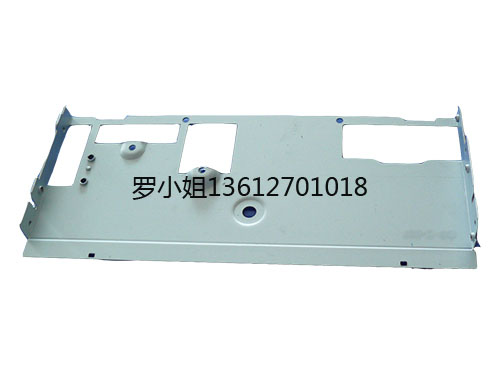
The disassembly of the unloading plate can first be carried out by balancing and prying it up with two screwdrivers, and then by balancing and applying force with both hands to remove it. When disassembly is difficult, check whether the mold is thoroughly cleaned, whether all the locking screws have been removed, and whether there is any damage to the mold caused by material jamming. Identify the cause and then take corresponding measures. Do not handle it blindly. When loading and unloading the material plate, first clean the punch and the unloading plate thoroughly. Add lubricating oil at the guide column and the punch's entry point, place it steadily in, and then press it in place with both hands. Repeat this process several times. If it is too tight, the cause should be identified (whether the guide pins and guide sleeves guide normally, whether there is any damage to each part, whether the newly replaced punch can pass through the unloading plate smoothly, and whether the position is correct). After identifying the cause, corresponding measures should be taken. If there are pressure blocks on the fixed plate, it is necessary to check whether there is sufficient material theft on the unloading back plate. The material contact surface between the discharge plate and the die will develop indentations after long-term stamping (the material clearance between the discharge plate and the die is generally 0.03-0.05mm less than the material thickness). When the indentation is severe, it will affect the pressing accuracy of the material, causing abnormal and unstable product dimensions, etc. Therefore, the discharge insert and the discharge plate need to be repaired or reground. The equal-height sleeve should undergo precision checks. If it is not at the same height, it will cause the discharge plate to tilt, and its precise guiding and smooth compression functions will be damaged. It needs to be maintained
3 Inspection of the guiding part
The fit clearance between the guide pins and guide sleeves, whether there are any burn or wear marks, and whether the oil supply state of the mold guide is normal should be inspected. The wear of the guiding parts and the destruction of their accuracy will reduce the precision of the mold, and problems will occur in various parts of the mold. Therefore, appropriate maintenance and regular replacement are necessary. Check the accuracy of the guiding parts. If the guiding pins are worn out and have lost the due guiding accuracy and function of the material tape, they must be replaced. Check the condition of the springs (such as the discharge spring and the ejection spring, etc.) to see if they are broken or have become fatigued and lost their original strength even if they have not broken after long-term use. Regular maintenance and replacement must be carried out; otherwise, it may cause damage to the mold or disrupt production
4 Adjustment of mold clearance
The core positioning holes are worn due to frequent and multiple combinations of the core, resulting in excessive clearance after assembly (loosening after assembly) or uneven clearance (positioning deviation), which will cause the cross-sectional shape to deteriorate after punching, the punch to be prone to breakage, and burrs to occur. Appropriate clearance adjustments can be made by checking the cross-sectional condition after punching. When the gap is small, the cross-section is less; when the gap is large, the cross-section is more and the burrs are larger. A reasonable gap can be obtained by shifting. After adjustment, appropriate records should be made, and marks can also be made on the edge of the die, etc., to facilitate subsequent maintenance operations. In daily production, it is necessary to pay attention to collecting and preserving the material tape of the original mold in its best condition. If the subsequent production is not smooth or the mold undergoes variation, it can be used as a reference for mold maintenance. In addition, it is necessary to pay attention to checking and maintaining the auxiliary systems such as whether the top material pin is worn out, whether it can push the material, and whether the guiding pin and the bushing are worn
Dongguan Jingzhuan Electronic Technology Co., Ltd. © Copyright 2025
【Backend】本站相关网页素材及相关资源均来源互联网,如有侵权请速告知,我们将会在24小时内删除