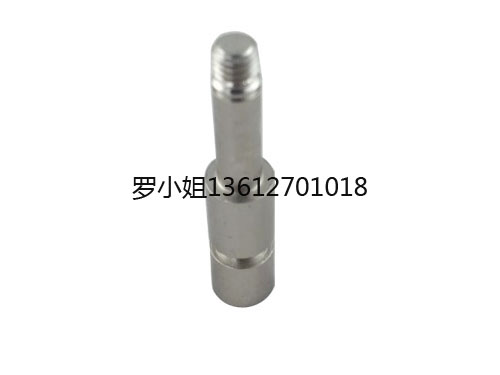
Jinche Parts and accessories cover multiple automotive systems such as engines, transmissions, brakes, and steering. Their working principle is based on mechanical mechanics, materials science, and hydraulic/pneumatic control, achieving power transmission, motion conversion, or force transmission through precise structures. The following elaborates on its working principle from the classification of core systems:
I. Engine System Accessories: The Core of energy Conversion
Crank connecting rod mechanism
Piston: It moves back and forth in a straight line within the cylinder and pushes the connecting rod through the pressure in the combustion chamber.
Connecting rod: It converts the linear motion of the piston into the rotational motion of the crankshaft. Its material must have high strength and fatigue resistance (such as alloy steel).
Crankshaft: Through the rotation of the main journal and the connecting rod journal, the force transmitted by the connecting rod is converted into the output power of the engine. Its balance weight design can reduce vibration.
Valve train
Camshaft: It controls the opening and closing timing of the intake and exhaust valves through the CAM profile, achieving the intake and exhaust cycle of the engine.
Valve spring: It utilizes elastic potential energy to ensure that the valves close rapidly when the camshaft is not subjected to force, preventing gas backflow.
Ii. Transmission System Accessories: The bridge for power transmission
Clutch
Pressure plate and clutch disc: Transmit or cut off engine power to the transmission through friction. The pressure plate presses against the clutch disc under the action of the spring. When the clutch pedal is depressed, the pressure plate separates from the flywheel, and the power is interrupted.
Flywheel: Stores the rotational energy of the engine, smooths the power output, and also serves as the installation reference surface for the clutch.
Transmission
Gear set: It changes the rotational speed and torque through the meshing of gears with different numbers of teeth. For instance, in low-speed gears, a large gear drives a small gear to achieve torque amplification.
Synchronizer: It synchronizes the rotational speeds of the gears to be meshed during gear shifting, reducing shock and wear, and enhancing the smoothness of gear shifting.
Drive shaft and universal joint
Drive shaft: It transmits the power from the transmission to the drive axle, and its length needs to adapt to the height changes of the vehicle body.
Universal joint: It allows the drive shaft to deflect within a certain Angle range, compensates for wheel jumping or axis deviation during steering, and ensures continuous power transmission.
Iii. Brake System Accessories: The Key to Safety Assurance
Hydraulic braking system
Master cylinder: When the driver steps on the brake pedal, mechanical force is converted into hydraulic pressure, pushing the brake fluid to flow to the slave cylinder.
Brake caliper: It converts hydraulic pressure into mechanical force, pushing the brake shoes or brake pads to press against the brake drum or brake disc, generating frictional force for deceleration.
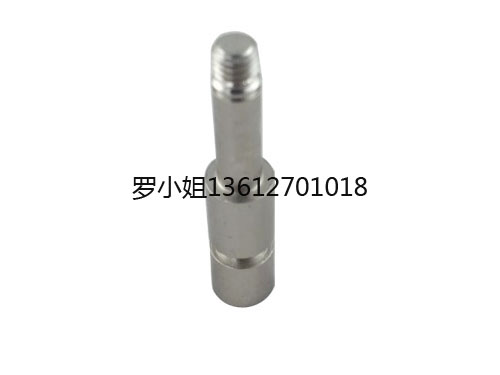
ABS pump: During emergency braking, it prevents wheel lockup by quickly adjusting the pressure of the sub-pump, maintaining the vehicle's steering ability.
Brake discs and brake pads
Brake disc: Fixed on the wheel, it rotates along with the wheel. The brake pads press against the brake discs under the action of hydraulic pressure, converting kinetic energy into heat energy through friction and dissipating it.
Ventilated brake disc: Internally designed with air ducts, it utilizes the airflow generated by rotation to accelerate heat dissipation and prevent heat attenuation during braking.
Iv. Steering System Accessories: Support for stable operation
Rack and pinion steering gear
Steering gear: A gear connected to the steering wheel that converts rotational motion into linear motion.
Rack: Meshes with the steering gear, connects to the steering knuckle through the pull rod, and drives the wheels to turn. Its modulus and pressure Angle design affect the steering sensitivity and accuracy.
Power steering pump
Hydraulic power steering: The engine drives the power steering pump to generate high-pressure oil, which is then distributed to the steering cylinder through the steering control valve to assist the driver in easily turning the steering wheel.
Electric power steering (EPS) : It directly provides steering assistance through the motor, dynamically adjusting the assistance size based on vehicle speed and steering Angle to enhance energy efficiency and handling.
V. Suspension System Accessories: A Balance between Comfort and Handling
Shock absorber
Double-tube shock absorber: Through the reciprocating motion of the piston in the oil, it converts vibration energy into heat energy for dissipation. The internal check valve design can adjust the damping force to adapt to different road conditions.
Macpherson suspension: Integrated shock absorbers and springs, compact structure, suitable for the front wheels, enhancing space utilization and handling stability.
Spring
Helical springs: They absorb road impact through elastic deformation, and their stiffness coefficient determines the softness or hardness of the suspension.
Air springs: They utilize the compressibility of compressed air to adjust the suspension height, enhancing the vehicle's off-road capability and ride comfort.
Vi. Body Accessories and Electrical Components: The Combination of Functionality and Aesthetics
Hinges and limiters
Door hinges: They support the rotation of the door, and their materials need to have high strength and corrosion resistance (such as stainless steel).
Limiter: It restricts the opening Angle of the car door through a spring or damping structure to prevent excessive opening from damaging the vehicle body.
Wiper
Motor drive: The high-speed rotation of the motor is converted into low-speed and high-torque output through a worm gear reduction mechanism, driving the wiper arm to swing.
Connecting rod mechanism: It converts the rotational motion of the motor into the reciprocating swing of the wiper blades, ensuring that the wiper area covers the front windshield.
Dongguan Jingzhuan Electronic Technology Co., Ltd. © Copyright 2025
【Backend】本站相关网页素材及相关资源均来源互联网,如有侵权请速告知,我们将会在24小时内删除