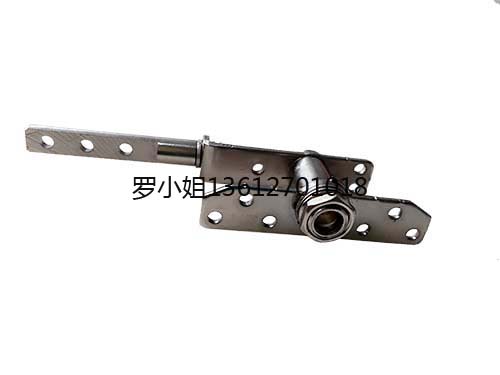
The flip shaft of a mobile phone is a core mechanical component that connects the main body of the phone with the flip part. It achieves the opening, closing, positioning and fixation of the flip through precise structural design. Its role is not only related to the basic usage functions, but also directly affects the durability, portability and user experience of the mobile phone. The following are the main functions and technical details of the flip hinge of a mobile phone:
I. Basic Function: To achieve the opening, closing and fixing of the flip cover
Free opening and closing control
The rotating shaft, through internal springs, gears or damping structures, allows users to freely flip the flip cover at a specific Angle (such as 90°-180°), while providing moderate resistance to prevent accidental closure. For instance, the early MOTOROLA V3 flip phone adopted a dual-axis design, allowing the flip to remain stably at any Angle, making it convenient for users to operate the keyboard with one hand.
Positioning function: The rotating shaft is equipped with a built-in positioning CAM or magnetic module, which emits a "click" sound when the flip cover is fully opened or closed, providing clear opening and closing feedback. For instance, the rotating shaft of the Samsung SG-E700 is magnetically attracted when closed, reducing the gaps and preventing dust from entering.
Multi-angle support
Some high-end flip phones (such as Sharp SH-06A) have a hinge that supports stepless adjustment. Users can fix the flip at any Angle between 30° and 150°, making it suitable for scenarios such as video viewing, selfies, or desktop placement. The interior of the rotating shaft adopts a high-precision gear set to ensure smooth Angle adjustment without loosening.
Ii. Structural Protection: Shock absorption and dust and water resistance
Impact-resistant design
The housing of the rotating shaft is usually made of metal (such as stainless steel, aluminum alloy) or high-strength engineering plastics, and the internal structure enhances the torsional strength through reinforcing ribs. For instance, the hinge of the Nokia 8800 has undergone 100,000 opening and closing tests and can withstand a drop from a height of 1.5 meters without damage.
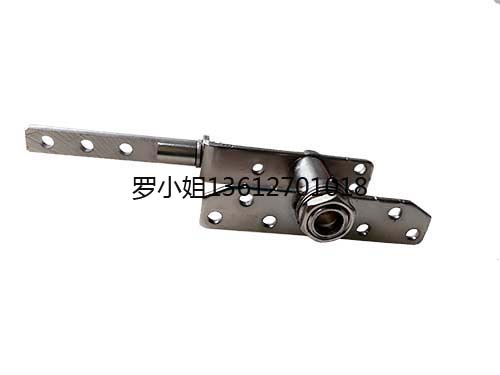
Buffering mechanism: Rubber pads or springs are integrated at the end of the rotating shaft to absorb part of the impact force when the phone drops, reducing the collision damage between the flip cover and the main body. For instance, when the hinge of the SONY Ericsson W995 is closed, the rubber pad can reduce the rebound force of the flip cover, protecting the screen.
Dust-proof and water-proof seal
The connection between the rotating shaft and the main body of the mobile phone adopts a silicone sealing ring or a labyrinth structure to prevent dust and liquids from entering the interior. For instance, the hinge of the Samsung W2019 has passed the IP68-level waterproof certification and can be immersed in a water depth of 1.5 meters for 30 minutes without water ingress.
Self-cleaning design: Some rotating shafts are coated with oil-repellent coatings or undergo special surface treatments to reduce the adhesion of oil stains and fingerprints, thereby lowering maintenance costs after long-term use.
Iii. User Experience Optimization: Enhance operational convenience and comfort
One-handed operation support
The resistance design of the rotating shaft needs to balance the smoothness and stability of opening and closing, ensuring that users can easily open the flip cover with one hand while avoiding the automatic closure of the flip cover due to gravity. For instance, the hinge of the LG GD900 adopts a "semi-automatic" design. After the user gently overturns the cover, the spring assists in completing the remaining opening and closing actions.
Fast response: The positioning accuracy of the hinge directly affects the exposure speed of the keyboard or screen. The hinge of high-end models (such as blackberry Passport) can activate the backlight the moment it is opened, reducing the user's waiting time.
Ergonomic fit
The position of the hinge should be designed in coordination with the thickness of the phone to avoid blocking the screen or keyboard when the flip cover is opened. For instance, the MOTOROLA RAZR series places the hinge in the center of the top of the phone, ensuring that when the flip cover is fully opened, the screen and keyboard are arranged in a straight line, which conforms to visual habits.
Weight distribution optimization: The internal counterweight blocks of the rotating shaft can adjust the center of gravity of the phone, enhancing the stability of the grip. For instance, the Samsung W2021 embeds tungsten steel counterweights in the hinge, ensuring the phone remains balanced when the flip cover is opened and preventing it from being top-heavy.
Iv. Technological Upgrade: Adapt to Diverse design requirements
Ultra-thin and lightweight
As the thickness of mobile phones is compressed to within 10mm, the hinge needs to adopt a miniaturized design. For instance, the Samsung Z Flip series adopts the "invisible hinge" technology, reducing the thickness of the hinge to 3mm while supporting multi-angle suspension.
Material innovation: The core components of the rotating shaft use liquid metals (such as zirconium-based alloys) or carbon fiber composite materials to reduce weight while ensuring strength. For example, the rotating shaft of Huawei Mate X2 adopts ultra-light tempered material, and its weight is reduced by 30% compared with the traditional rotating shaft.
Multi-functional integration
Wireless charging compatibility: Some rotating shafts are internally embedded with wireless charging coils, enabling the phone to be charged even when the flip cover is closed. For instance, the hinge of the LG Wing supports reverse wireless charging, which can power accessories such as headphones.
Biometric module: A fingerprint recognition sensor is integrated on the side of the rotating shaft, and the unlocking can be completed when the user opens the cover. For example, the hinge fingerprint module of SONY Xperia Pro-I has a response speed of 0.2 seconds, which is comparable to the screen fingerprint.
Dongguan Jingzhuan Electronic Technology Co., Ltd. © Copyright 2025
【Backend】本站相关网页素材及相关资源均来源互联网,如有侵权请速告知,我们将会在24小时内删除